
Neighborhood grill vs. baby back ribs
Two national titans, cold beer, big promises — and a photo finish measured in inches.

Editor’s Note: Saturday Sips is back and will remain moving forward. Life got weird for a little bit, but Saturday deliveries with interviews, features, trend pieces and detailed reviews like today’s are back! Shoot me a note or comment and let me know what you want to read about!
Saturday night, two national brands, one question: are these places actually different once the plates hit the table?
Applebee’s and Chili’s live in the same neighborhood of the American mind. Corporate and casual with big menus and bigger parking lots. One has a reputation that practically became a meme, coughCrapplebeescough. The other owns ribs, fajitas and a jingle that can burrow into your brain for decades.
We’ve already done our incredible visits to the steakhouse chains of America. So, Ed and I did the only fair thing. Check out the casual chain sit-down spots and try to see which chain staple comes out on top.
Also, before we move forward, I really love this recently circulating video of the recording of the jingle.
Applebee’s
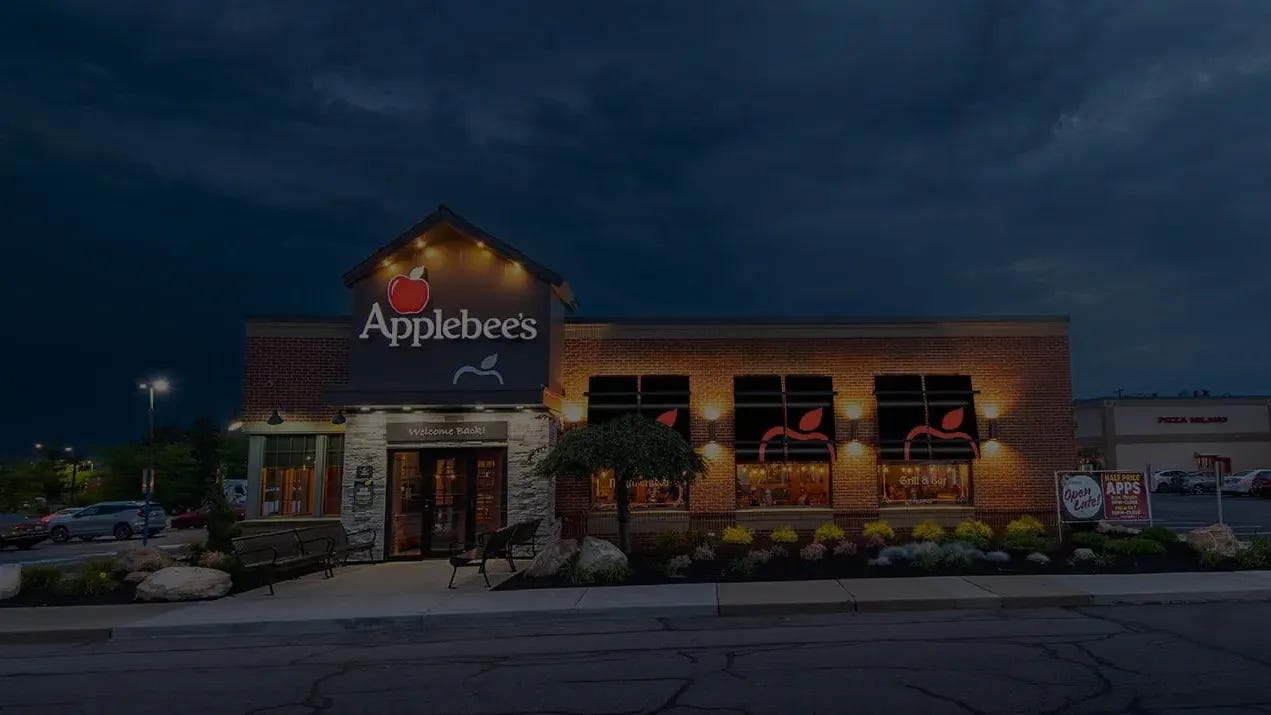
Applebee’s began in 1980 when Bill and T.J. Palmer opened a spot in Decatur, Georgia, built around the idea of a friendly, affordable neighborhood grill that could travel well from town to town. Franchising took off quickly, turning the concept into a coast-to-coast fixture through the ’80s and ’90s as suburban growth and mall culture boomed.
The brand leaned hard into approachability: big menus, sports on TV, burgers, riblets, and drinks designed for comfort over adventure. In 2007, IHOP’s parent company bought the chain, later rebranding itself as Dine Brands, placing Applebee’s inside a portfolio built on scale, promotions, and operational uniformity. Over time it became shorthand for mainstream casual dining in America, a place as familiar as the parking lot it sits in.
We arrived early on a Wednesday, and the place felt like a library after hours. Plenty of booths, plenty of quiet, and plenty of time to contemplate life choices. No complaints on the beer, though: icy, exactly how a chain should deliver it.
Then the menu landed.
Enormous, and yet somehow, with all those options, not a single thing jumped up and demanded to be ordered. When everything is special, nothing is.
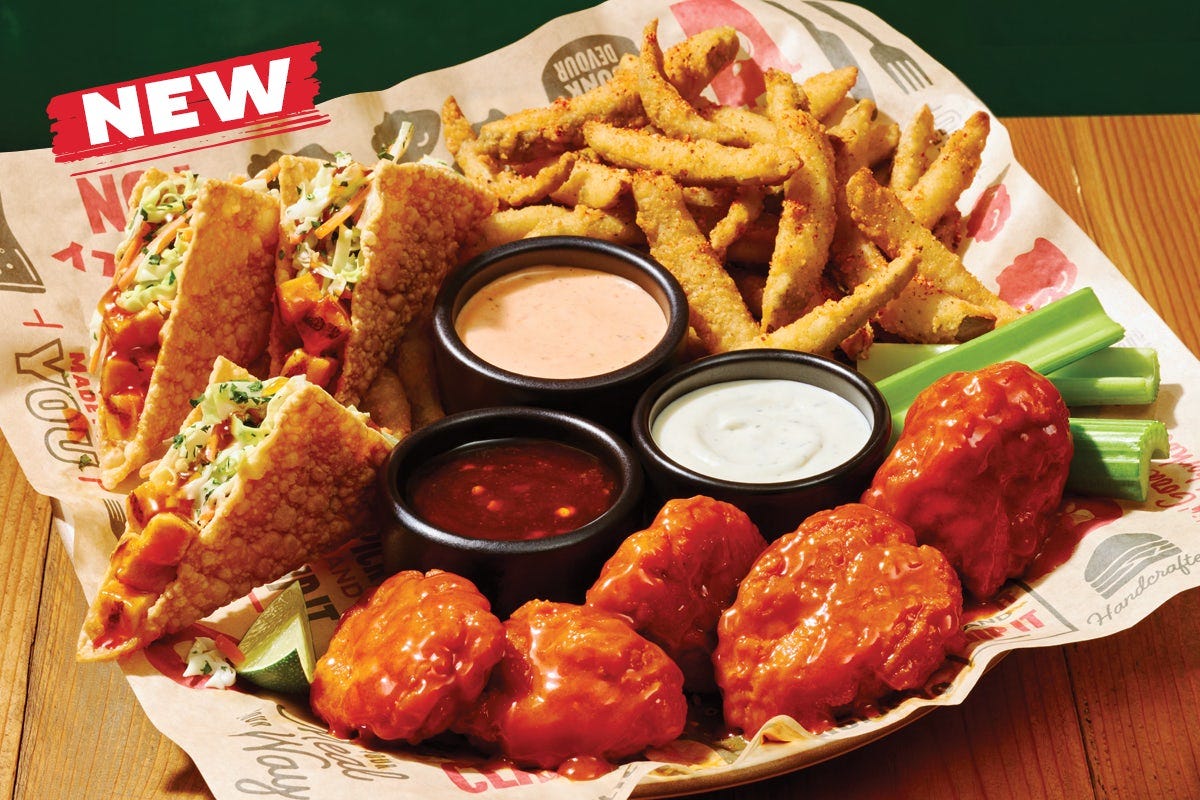
We started with wings boldly billed as “America’s Favorite.” What arrived were heavily breaded, short on meat, lightly sauced, and carrying a buffalo profile with all the heat of a polite handshake. Fascinating in the way a study in restraint can be.
The ribs followed, ordered simply to see how they would compare against Chili’s claim to fame. The glaze had personality, we’ll give it that, but the dominant note was black pepper. Not bad, not great, just there, tapping you on the shoulder again and again.
The burger? Quiet and bland, more so than a bad backyard grill master would muster. The fries were limp enough to suggest they’d already had a long day.
Across the table with Ed sat a skillet of Bourbon Street Chicken and Shrimp, a cool name that ended up carrying cafeteria energy in the presentation. Think weeknight microwaved convenience, plated.
Drinks leaned sweet and shy on the alcohol. A margarita and a Long Island that felt more like Kool-Aid.
Total verdict leaving the parking lot: nothing offensive, nothing memorable, and no reason to return except for maybe a cheap pint.
Chili’s
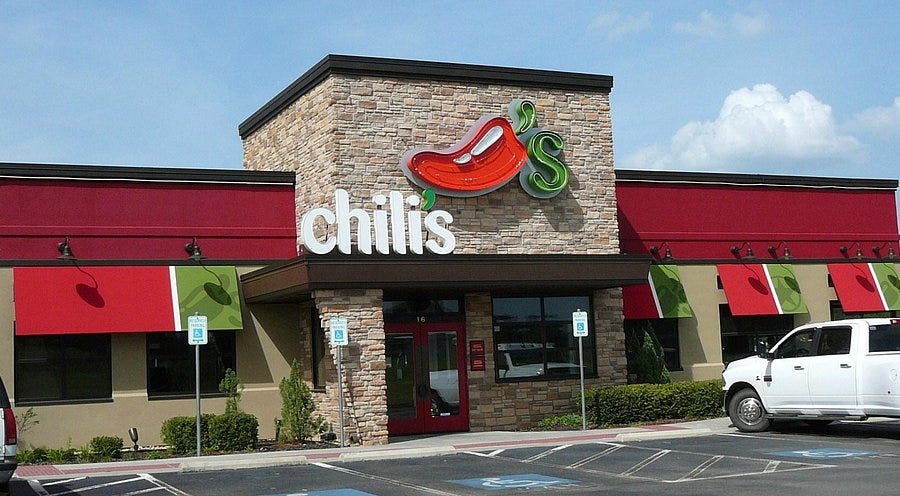
Chili’s opened in Dallas in 1975, founded by Larry Lavine with a simpler playbook: burgers, fries, margaritas, and a Southwestern accent that helped it stand apart from standard bar-and-grill fare. The chain expanded rapidly during the casual-dining gold rush, eventually becoming a flagship brand for Brinker International.
Along the way, it carved out specific identity markers as fajitas arrived with smoke and sizzle, baby back ribs backed by an advertising earworm, and a bar program that aimed to feel a touch more festive than its peers. The growth strategy was national, but the vibe tried to keep a little Texas swagger in its step, balancing mass replication with just enough personality to feel distinct.
On a different Wednesday, we made our way to Chili’s. It was the same day of the week, but with entirely different energy. This place had a pulse as the tables were full, baskets of chips everywhere, salsa and queso doing laps. Unlimited refills of chips will do that and optimism crept in.
Beer again delivered: cold and reliable.
Boneless wings came out looking like they’d been to the gym compared with the previous stop. More chicken, actual sauce coverage, and a buffalo kick that at least raised its voice a little. A clear edge, unfortunately maybe the only one despite high hopes walking in the door.
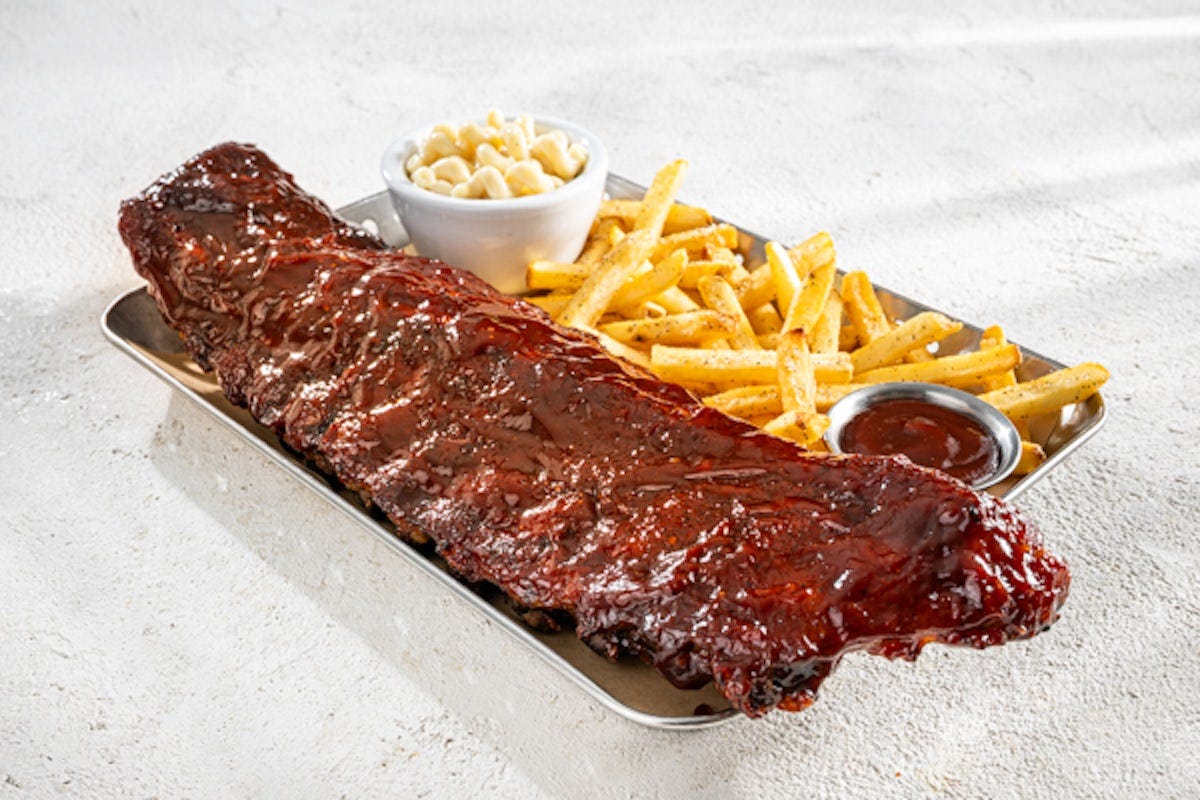
Given the brand mythology, expectations for ribs climbed. What landed was firmer than hoped. Not inedible, just stubborn. Maybe timing, maybe luck of the draw, but the letdown registered.
The burger improved by a small but measurable margin. If the earlier one whispered, this one spoke in a normal indoor voice.
The sizzling fajitas didn’t come out exactly sizzling. Chicken, peppers, onions, all behaving themselves; none of them interested in spice. Even the tortillas sparked curiosity, neither fully this nor that, existing in a sort of tortilla limbo.
We walked out chewing on the same conclusion.
Yes, differences exist. And Chili’s delivered a slightly better all-around experience. But zoom out and the experience converges. Cold beer, a broad menu, and familiar flavors engineered not to scare anyone. Safe, predictable and mass appeal by design.
In other words, these rivals aren’t separated by a canyon. They’re divided by inches.
And inches rarely make for legendary nights out.
Our next journey: Surf & Turf at Red Lobster and Bonefish Grill.